
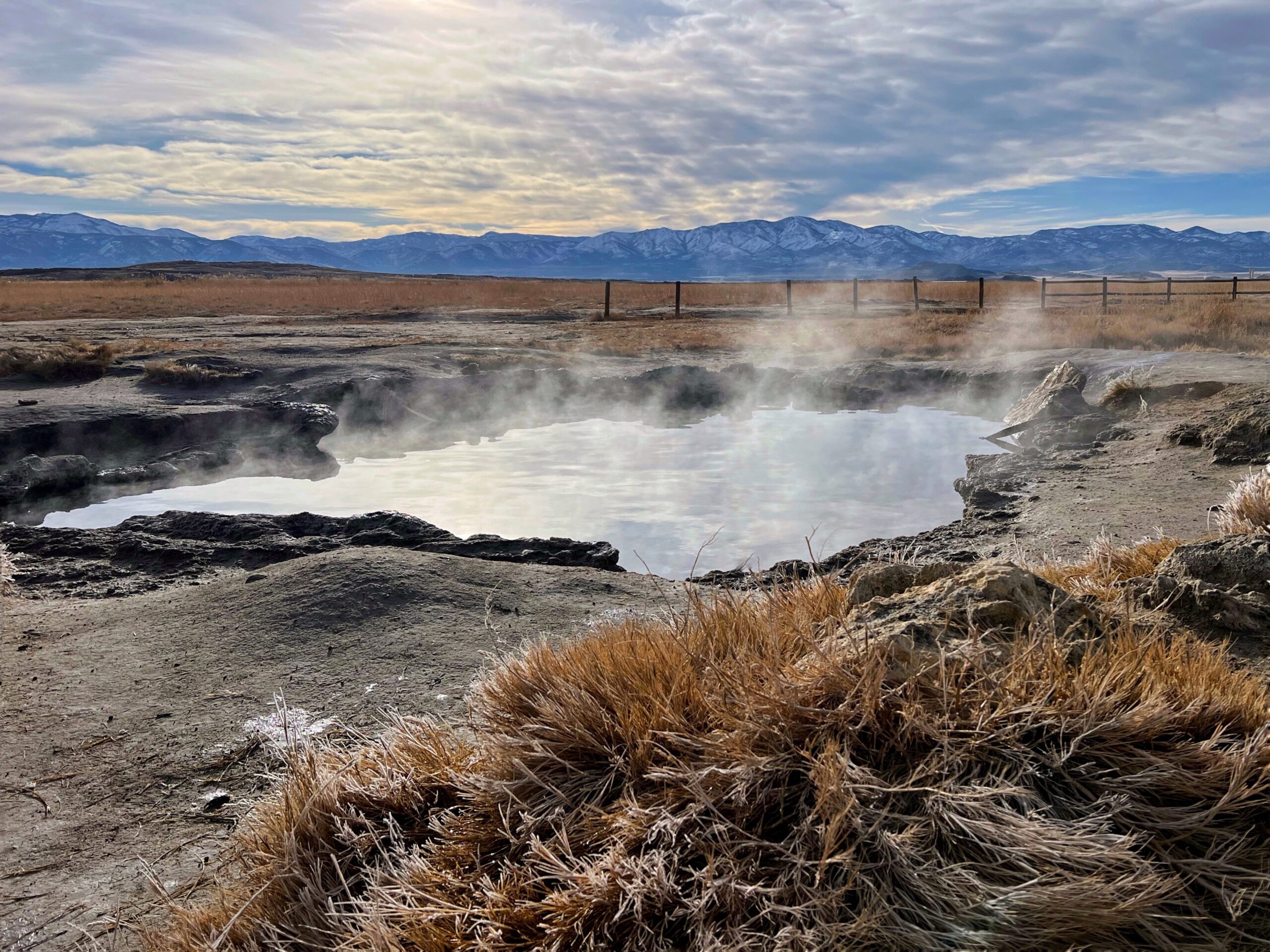
A Local’s Guide to Natural & Commercial Soaks
Utah might not be the first place people think of when it comes to hot springs, but after years of soaking here, I genuinely think it deserves more attention.
I’m sharing this guide with you under one important assumption, that you’ll practice Leave No Trace principles. These hot springs only stay accessible and enjoyable if we treat them with care, respect private land, and leave places better than we found them. Deal?!
I’ve visited Utah hot springs in every season: snowy winter hikes, golden fall afternoons, quick road-trip stops, and those days when sitting in hot water feels like the only solution for sore muscles. They are also amazing for your mental health. Some of these springs I return to again and again. Others I’ve tried once and don’t feel the need to revisit. And a few are included simply because I’ve had people ask about them over the years.
This guide covers the best hot springs in Utah, including natural and commercial hot springs, hiking details, costs, history, and tips, all based on personal experience.
Conditions change, access shifts, and crowds vary. Treat this as a guide, not a guarantee.
Fifth Water Hot Springs
Most Popular Natural Hot Springs in Utah
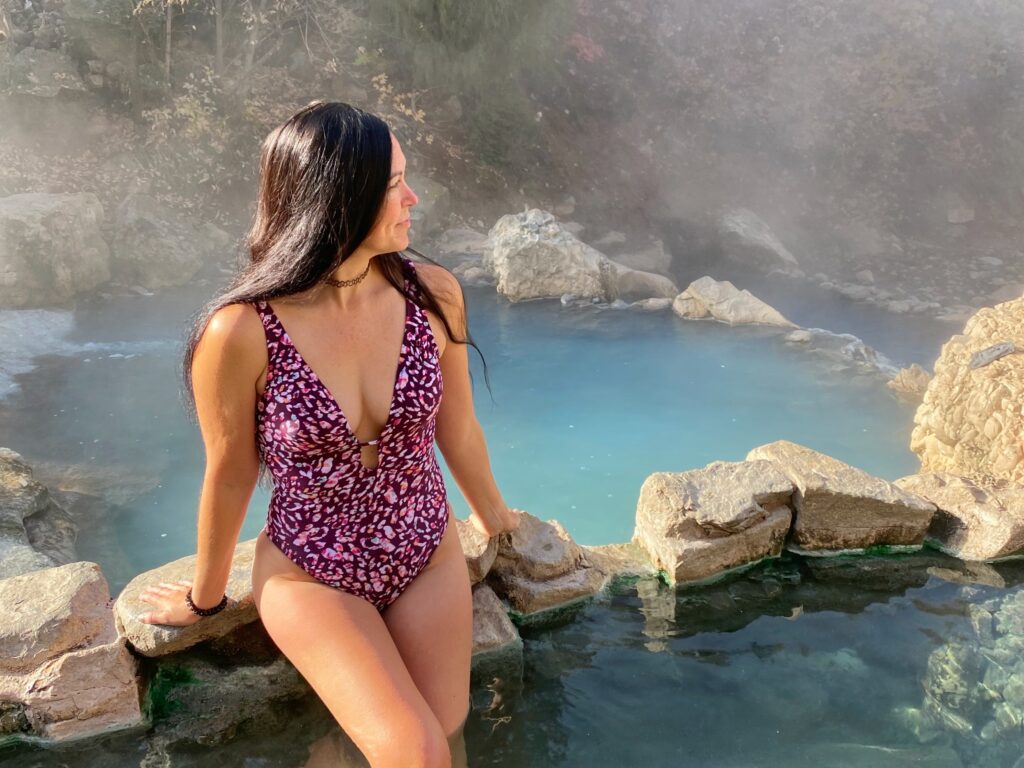
If you ask someone about Utah hot springs, Fifth Water (also called Diamond Fork) is usually the first place mentioned, and for good reason.
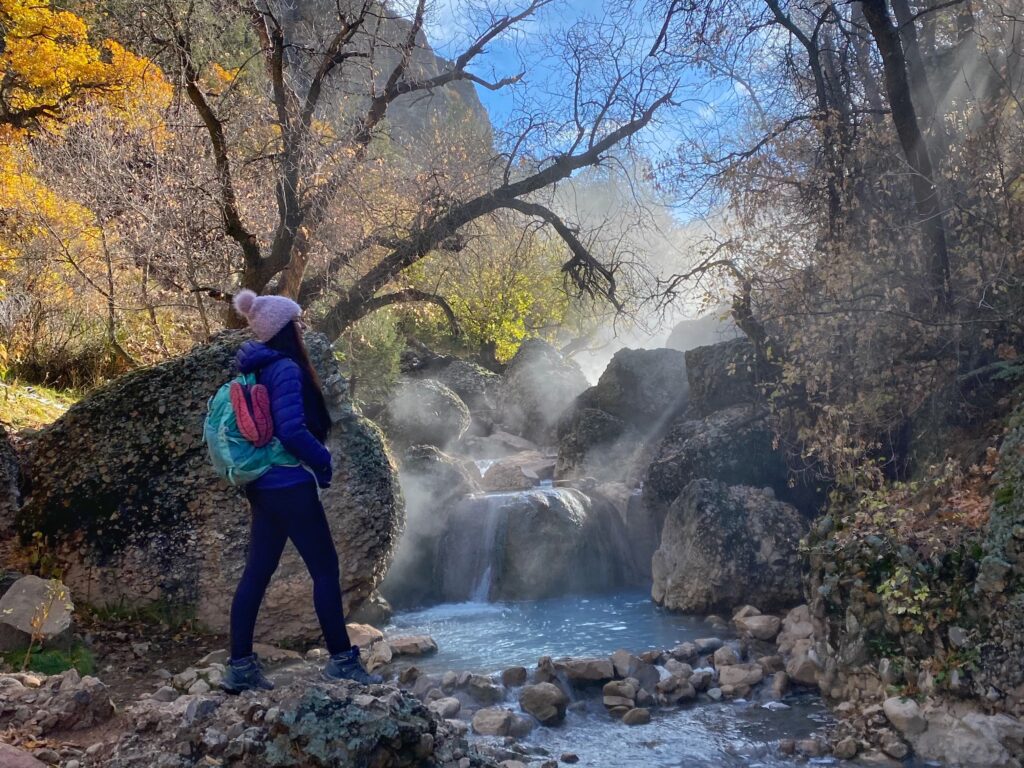
The milky blue water is stunning year-round, especially in fall and winter when steam rises against snow and golden trees. I typically visit in fall or winter, but winter comes with extra mileage.
When the gate is closed, the hike increases from about 5 miles round trip to 7 miles round trip, with the added distance mostly along a road. The hike isn’t technical, just longer, but it will get VERY slick in the winter, so be sure to bring your microspikes.
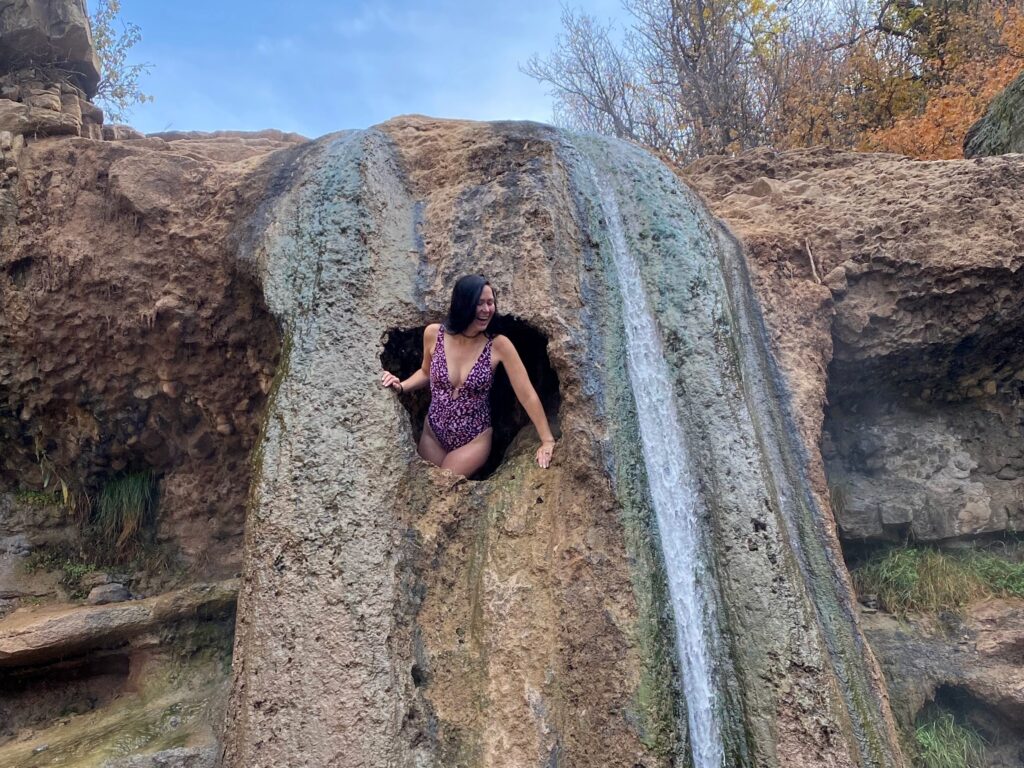
Most visitors stop at the main pools, but if you continue upstream you’ll find a hot waterfall. Be careful here as water temperatures near the source are extremely hot and footing can be slick. You can even continue hiking above the waterfall for more solitude, though the water cools down the further you get from the waterfall (both directions)
Diamond Fork is beautiful, but very busy, so if you want fewer crowds, visit early in the morning, later in the evening, or on a weekday.
Location: Diamond Fork Canyon near Spanish Fork, Utah
Hiking Distance:
- Summer: ~4–5 miles round trip
- Winter: ~7–8 miles round trip
Cost: Free to soak; parking fee of $10 or an America the Beautiful Pass is required
Tips:
- Expect crowds on weekends
- Bring water shoes as rocks are slick
- Winter adds mileage and snow conditions
Meadow Hot Springs
Easy Access Hot Springs Near I-15
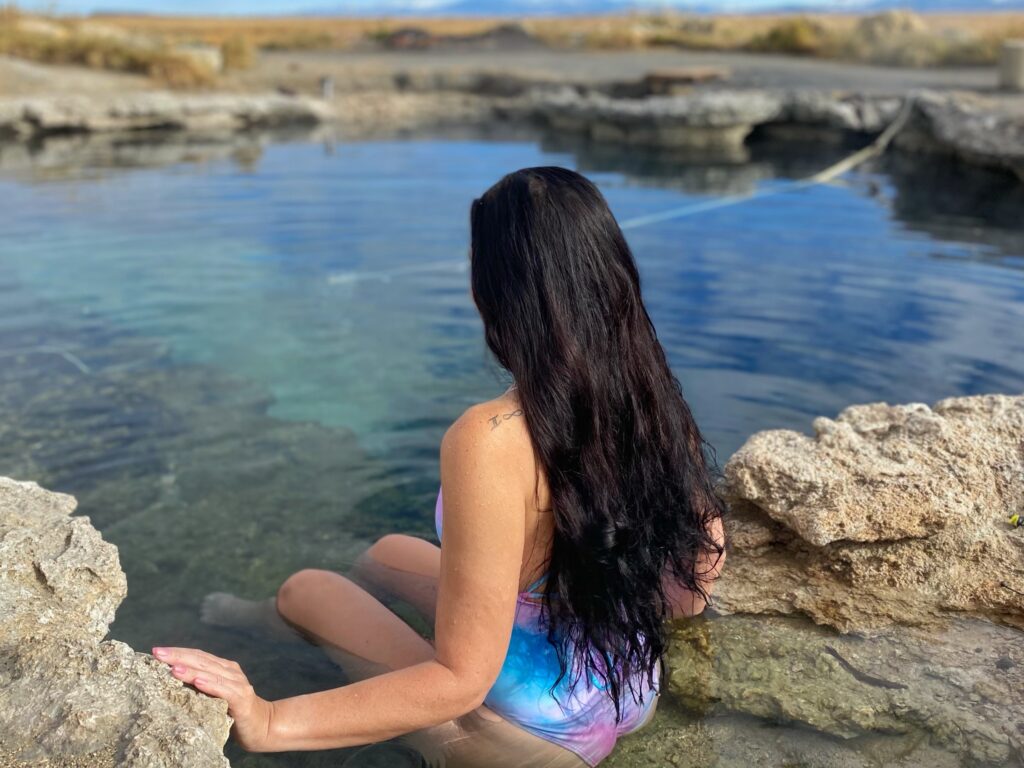
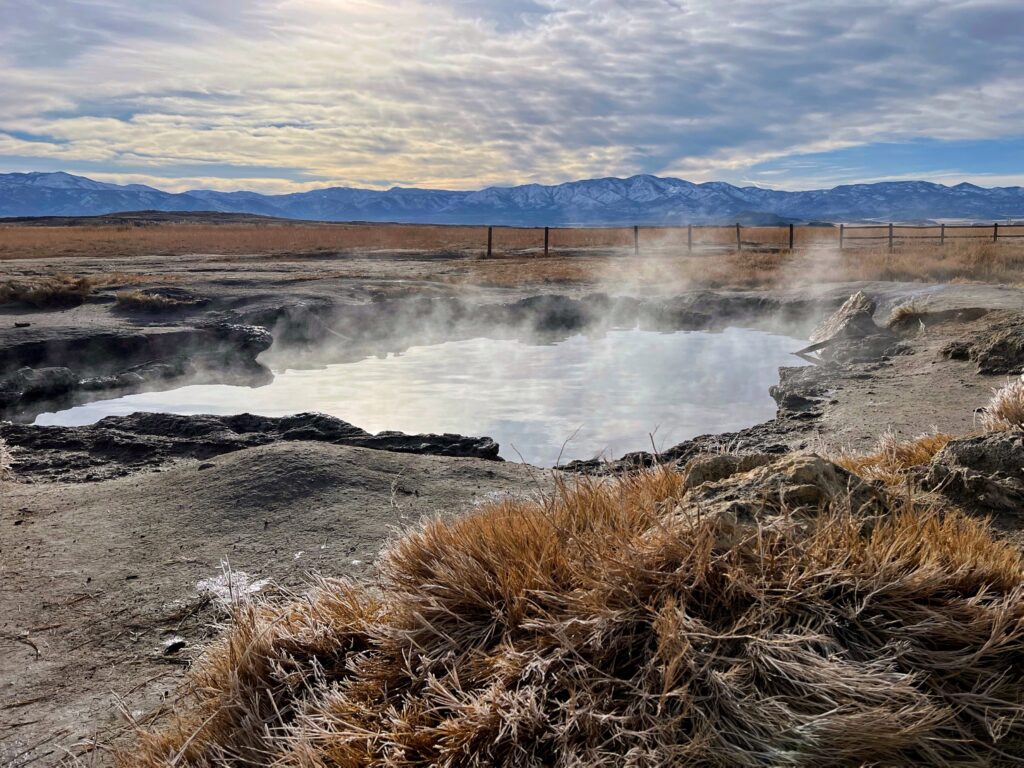
If I had to choose a personal favorite Utah hot spring, Meadow Hot Springs would probably be it.
There’s no real hike here, just a short walk from the parking area to a crystal-clear pool literally in the middle of a field. It’s one of my favorite stops when driving between Salt Lake City and southern Utah’s National Parks, and it’s amazing year-round.
There are several pools, but only one stays warm enough for winter soaking. The others are great options for summer soaking.
That said, Meadow Hot Springs is slick and sharp. The rocks can be unforgiving, and I almost always leave with a bruise or two. Move slowly and wear water shoes if possible.
This hot spring is on private land, and access exists because landowners allow it. Please be respectful and leave a donation if you’re able.
Location: Near Meadow, Utah (just off I-15)
Hiking Distance: Minimal
Cost: Free; donations encouraged
Tips:
- Rocks are sharp and slippery
- Water is deep, know your limits
- Respect private land access
Baker Hot Springs
Remote West Desert Hot Springs
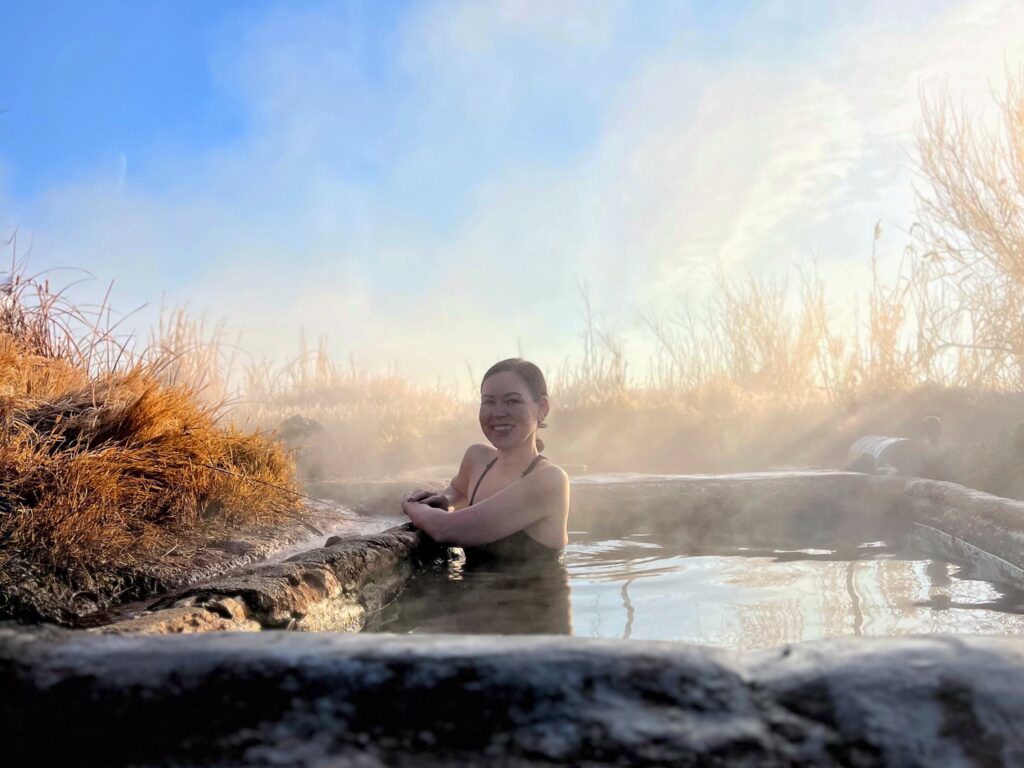
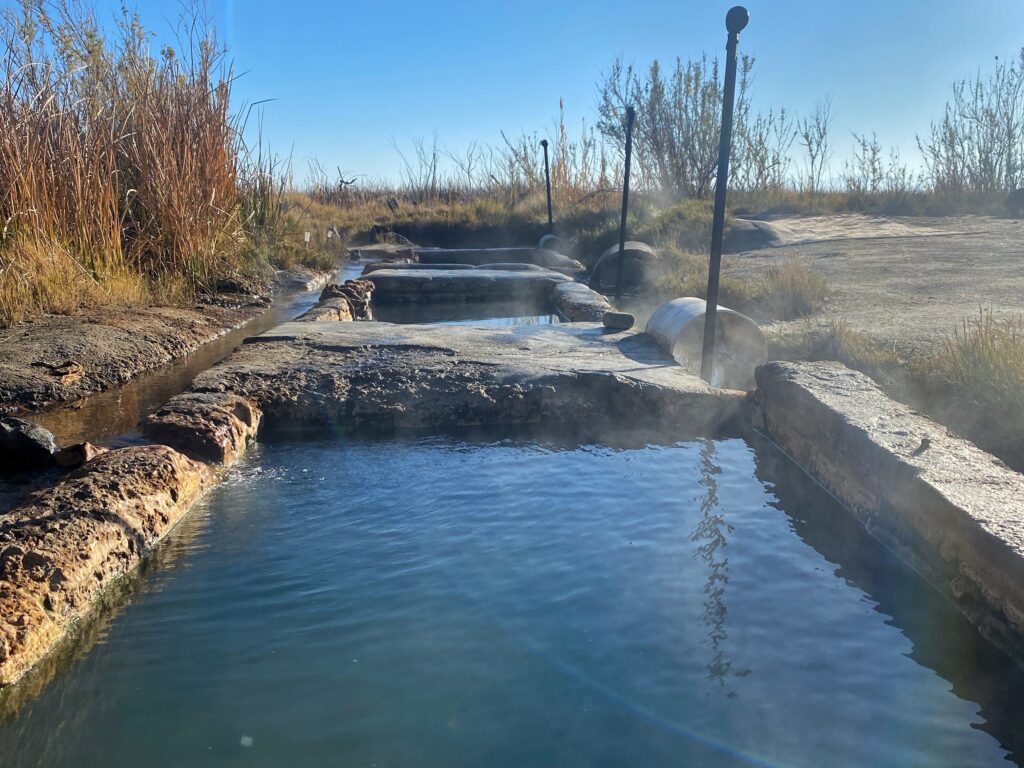
Baker Hot Springs sits in Utah’s west desert and feels completely different from anything near the Wasatch Front.
Three soaking tubs sit beneath wide-open skies, fed by very hot geothermal water. Cold water lines allow you to adjust the temperature, but ease in slowly as these tubs get hot fast.
This is also the Utah hot spring where you’re most likely to encounter nude bathers. It’s never bothered me, but it’s worth knowing ahead of time, especially if you plan to bring children.
Because there are only three tubs, Baker Hot Springs can get crowded quickly. Early mornings, sunset, or weekdays are best.
Location: West of Delta, Utah
Hiking Distance: None
Cost: Free
Tips:
- Extremely remote, bring water, and supplies and download your map
- Watch water temperature
- Pack out everything
Inlet Park Hot Springs
Closest Hot Springs to Salt Lake City
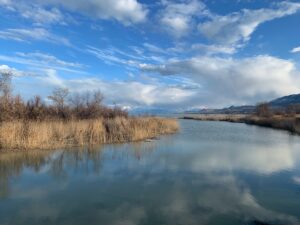
Inlet Park Hot Springs (also known as Saratoga Hot Springs) are included because people have definitely asked me about them, but I’ll be honest: I’ve never soaked here.
They’re very close to the city, require almost no effort to reach, and because of that, they’re almost always crowded. The water is shallow and murky (kinda muddy), making it more of a communal soak than a scenic experience.
Location: Inlet Park, Saratoga Springs, Utah
Hiking Distance: Less than a quarter of a mile from the parking lot
Cost: Free
Mystic Hot Springs
Unique & Rustic Hot Springs Experience
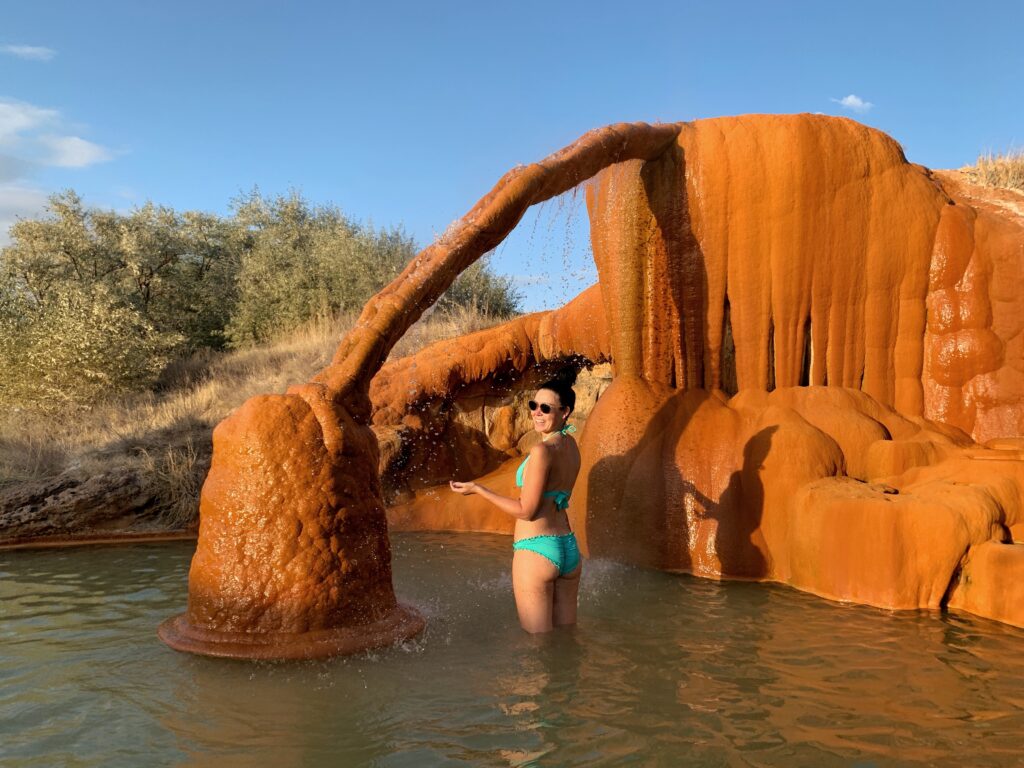
Mystic Hot Springs is quirky, rustic, and unforgettable.
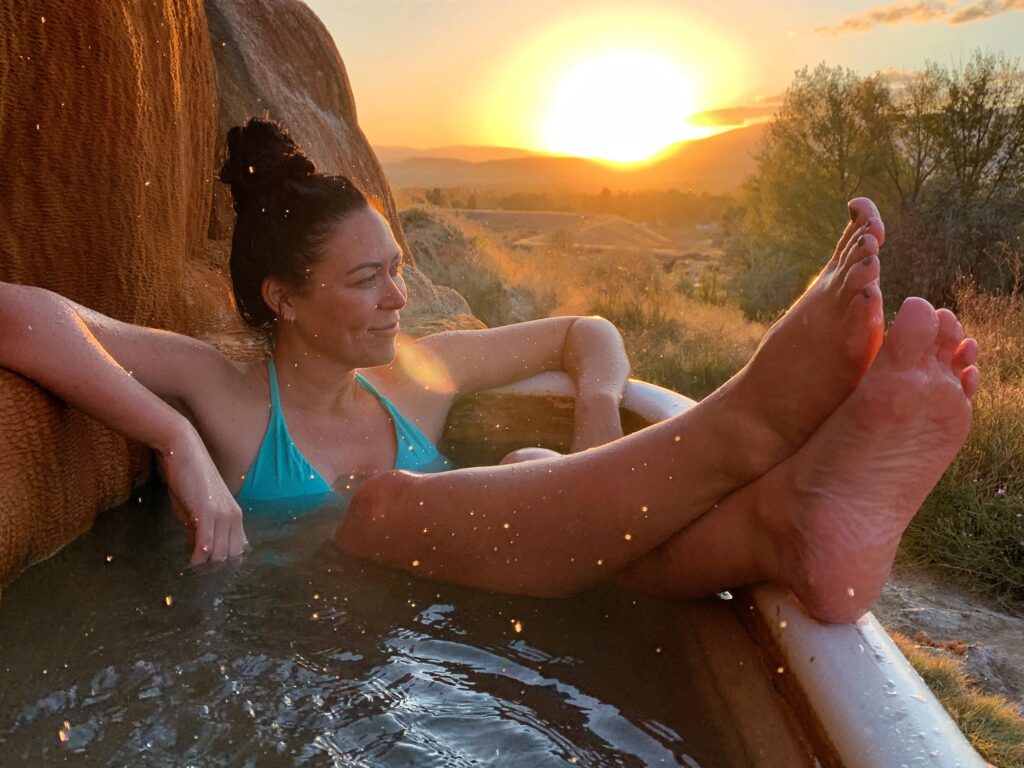
Vintage bathtubs line a hillside, each filled with flowing hot spring water. There’s also a larger communal pool if tubs are full. I personally feel that sunset is the best time to soak.
When my husband and I visited, we shared a tub to avoid taking up extra space. While it can get busy, it never felt overwhelming.
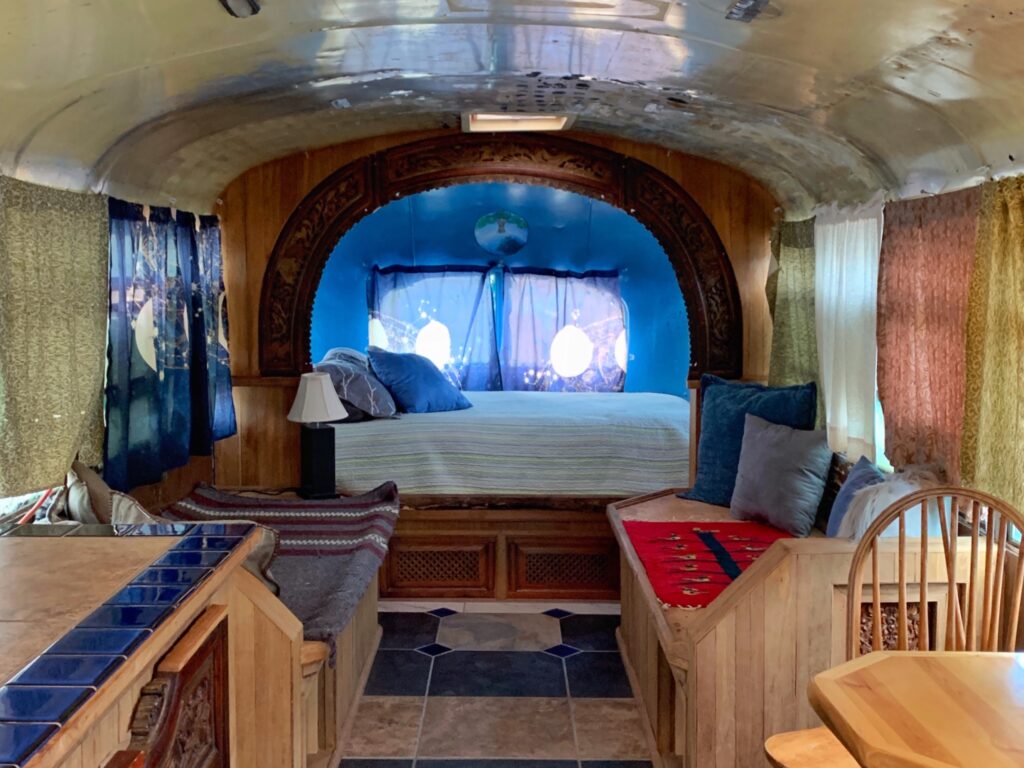
Mystic also offers overnight stays in converted buses. It’s not luxury, but it is memorable. My husband and I really enjoyed our bus stay! It was late fall, so it was chilly, but they provided us with electric blankets which kept us plenty warm.
Location: Near Monroe, Utah
Cost: $28.41 per person for two hours of soaking; reservations required
Tips:
- Book ahead
- Expect rustic conditions
- Plan for sunset
Crystal Hot Springs
Best Commercial Hot Springs in Utah
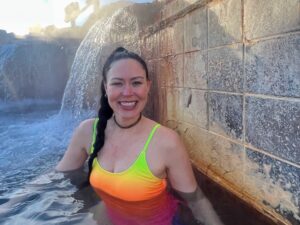
Crystal Hot Springs is our go-to commercial hot spring, and we visit several times a year. They are also known for their high mineral content.
Multiple pools offer different temperatures, making it easy to soak comfortably. It’s a great option when you want hot springs without hiking. This is also a great place for kids as some of the pools offer slides.
Weekends do get busy, so weekdays are best when possible.
Location: Honeyville, Utah
Cost: $18 per person
Tips:
- Great for families and groups
- Weekdays are quieter
Homestead Crater
A Unique Indoor Warm Spring You Can Swim In
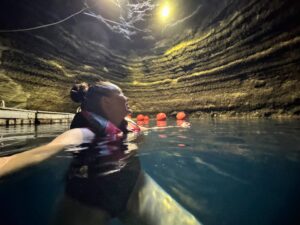
The Homestead Crater is unlike any other “hot spring” in Utah, and I put that in quotes on purpose.
Technically, this is more of a warm spring than a hot spring, but I still absolutely love it. The water temperature stays relatively consistent year-round thanks to geothermal heat from the ground, but that means it actually feels warmest in summer and coolest in winter.
What makes this place stand out is that you can fully swim around inside the crater. The water is deep, clear, and cavern-like, with light filtering in from the opening above. Because of the depth, life jackets are required, which makes it feel more like a floating, soaking experience than a traditional sit-and-soak.
One of the coolest things about the Homestead Crater is that you can actually get scuba diving certified here. It’s a popular training location because of the consistent water temperature and controlled environment…and it’s something I’ve been seriously considering doing one day.
This is also a great option if you want a soaking experience without hiking, weather worries, or remote access issues.
Location: Midway, Utah (on the Homestead Resort property)
Access: No hiking
Cost: $25 per person for 40 minutes; reservations required
- Tips
- Life jackets are required for soaking (they will have them available for you)
- Book ahead as time slots fill quickly
- Expect warm, not hot, water
- Great year-round option regardless of weather
Final Thoughts: Utah Hot Springs Are Worth Slowing Down For
Utah’s hot springs come in many forms: scenic hikes tucked into canyons, quiet desert tubs, easy roadside stops, and unique warm springs you can actually swim in. Together, they offer a wide range of experiences for every kind of outdoor lover.
Whether you’re soaking to ease sore muscles, clear your head, or just sit quietly in warm water for a while, Utah’s hot springs have a way of reminding you to slow down and be present.
If you’ve been thinking about visiting any of these…go for it! Just remember to practice Leave No Trace, respect private land, and leave these places better than you found them so they stay open and special for everyone.
Utah’s hot springs aren’t about checking boxes, they’re about coming back again and again, in different seasons, for different reasons.
Looking for More Hot Springs Adventures?
If you’re interested in exploring beyond Utah, you might also enjoy my guide to Idaho’s best hot springs, which covers scenic soaks, road-trip-friendly stops, hiking details, and seasonal tips.
Read here: The Best Hot Springs in Idaho
Idaho and Utah hot springs pair surprisingly well for road trips, especially if you’re chasing quieter soaks, longer adventures, or shoulder-season travel.
FAQ: Everything You Need to Know About Visiting Utah’s Hot Springs
1. Do I need a 4×4 to reach Utah’s hot springs?
In most cases, no. Many of Utah’s hot springs, including Meadow, Saratoga, Crystal, Mystic, and the Homestead Crater, are accessible with a regular 2WD vehicle.
That said, season matters. From late fall through early spring, snow, ice, and mud can impact access roads, especially for places like Fifth Water Hot Springs and Baker Hot Springs.
Always:
Check weather and road conditions
- Bring winter driving essentials in colder months
- Have snow tires or chains if storms are forecast
- Drive slowly, especially at dawn and dusk when wildlife is active
2. How difficult is the hike to Diamond Fork Hot Springs?
Diamond Fork (Fifth Water) is considered a moderate hike, but distance depends on the season.
What to expect:
- Summer: ~4–5 miles round trip
- Winter: ~7–8 miles round trip if the gate is closed
- Elevation gain is moderate, not technical
- The trail itself is well-worn, but snow and ice are common in winter
In colder months, microspikes or traction devices can make a big difference.
3. Are Utah hot springs crowded?
Crowds vary widely by location and season:
- Diamond Fork: Very busy, especially on weekends
- Meadow & Saratoga: Popular due to easy access
- Baker: Can feel crowded quickly since there are only three tubs
- Commercial springs: Busy on weekends, quieter on weekdays
Best times for fewer people:
- Early mornings
- Weekdays
- Late afternoons or evenings
4. Do I need to pay or get a permit to soak?
It depends on the spring.
Currently:
- Diamond Fork: Free to soak; $10 parking fee or America the Beautiful pass required
- Meadow, Baker, Saratoga: Free (donations encouraged at Meadow)
- Mystic, Crystal, Homestead Crater: Paid admission required
Fees and access rules can change, so it’s always a good idea to check ahead.
5. Are Utah hot springs safe to soak in?
Generally yes, if you use common sense.
Important safety notes:
- Water near the source can be extremely hot
- Temperatures change by season and water flow
- Rocks are often slick and uneven
- Never block or alter natural water flow
Always test the water before getting in and move slowly around the pools.
6. What’s the best time of year to visit Utah hot springs?
Each season offers something different:
- Winter: Snowy scenery, fewer bugs, more planning required
- Spring: Variable access, changing water levels
- Summer: Easier access, warmer air temps, bigger crowds
- Fall: Cooler weather, great soaking conditions
Commercial hot springs are great year-round.
7. Are dogs allowed at Utah hot springs?
It depends on the location.
General guidelines:
- Dogs are usually allowed on trails like Diamond Fork
- Dogs should never enter hot spring pools
- Leashes may be required in certain areas
- Sharp rocks and hot water can be dangerous for paws
Always check local rules and be mindful of other visitors.
8. How long should you plan for each hot spring?
A rough planning guide:
- Diamond Fork: 3–5 hours (hike + soak + exploring)
- Meadow Hot Springs: 1–2 hours
- Baker Hot Springs: 1–2 hours
- Commercial springs: 1–3 hours, depending on crowds
This gives you time to enjoy the experience without rushing.
9. What should I pack for a Utah hot springs visit?
Essentials for all seasons:
- Swimsuit & quick-dry towel
- Water shoes or sandals
- Drinking water & snacks
- Waterproof bag for wet clothes
- Trash bag (pack it all out)
Cold-weather adds:
- Microspikes or traction devices
- Warm layers for before/after soaking
- Gloves + beanie
- Hot drink in a thermos
10. Is there cell service at Utah hot springs?
Cell service is often limited or nonexistent, especially at:
- Diamond Fork
- Baker Hot Springs
- Meadow Hot Springs
Download offline maps, directions, and screenshots before you go.
Thank you for being here!
It truly means a lot that you’re spending time here and trusting me as part of your adventure planning.
If you’re curious about the gear I personally use on my outdoor adventures, from hiking essentials to cozy layers and trail-tested favorites, you can find it all in my Amazon shop. This is the gear I actually use and love, and it’s always evolving as my adventures do.
If you have any questions or want to share your own hot springs stories, feel free to leave a comment or email me at cassie@thatoutdoorsygal.com. I love connecting with other outdoor lovers.
And as always, please remember to practice Leave No Trace so these beautiful places stay wild and accessible for the next adventurer. Conditions, access, and fees can change seasonally, so be sure to double-check information before you go.