Chasing winter light, iconic views, and a little solitude in the Canadian Rockies
Last December, I felt that familiar end-of-year pull, the “I need one more big adventure before the year is over” kind of feeling. I kept bouncing between a few Utah national parks, but nothing quite felt big enough for what I was craving at the time. On a whim, I typed Banff National Park into Google Maps from Salt Lake City.
Thirteen and a half hours.
That felt very doable, but what I didn’t factor in, was winter.
Emmy had to work that weekend, so this was a solo Cassie trip…and honestly, I love solo travel. I love setting my own schedule, chasing sunrise without anyone complaining, and having space to think while the miles pass by.
Fun Fact: Banff National Park was established in 1885, making it Canada’s first national park.
When 13.5 Hours Turns Into 18
There was no snow in the forecast when I left Salt Lake City, but about an hour into the drive, that changed. Snow started falling and followed me nearly the entire way north, slowly stretching my drive longer and longer.
By the time I reached Calgary, it was very clear I wasn’t making it to Banff that night. I could have pushed on, but I was tired, the roads were slick, and winter driving decisions have a way of compounding fast.
I pulled off and booked a room at Grey Eagle Resort, a casino hotel right off the freeway. It ended up being much nicer than I expected, and honestly, a perfect unplanned stop. I’d love to go back someday and actually explore Calgary more. From what I saw, it looked like a beautiful city.
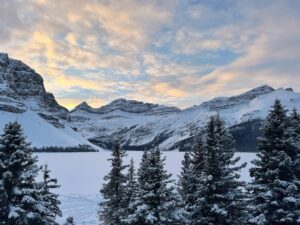
Entering Banff National Park (Before You Even Reach Town)
I left Calgary early the next morning, hoping to reach Banff by sunrise. Even in the dark, I could tell the drive through Bow Valley was beautiful, and I was bummed to be missing the views, but daylight would come soon enough.
One thing I hadn’t fully understood during my research was how Banff is laid out. After passing through Canmore, you actually enter Banff National Park before you even reach the town of Banff itself. Because the town sits inside the park, you need a Parks Canada pass before going anywhere near downtown.
There were no issues getting one at the gate, but it was something I wish I had known beforehand.
As I rolled in during blue hour, the mountains appeared, towering directly over the town. I thought Salt Lake City was in the mountains, but Banff is truly IN them.
Tip: Purchase your Banff National Park pass at the gate or online ahead of time to save a little stress.
Fun Fact: The Bow Valley has been a travel corridor for Indigenous peoples for over 10,000 years.
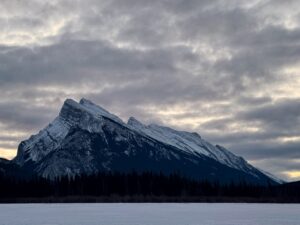
Sunrise at Vermilion Lakes
My first stop was Vermilion Lakes, one of the most popular sunrise spots in Banff. The sunrise itself didn’t end up being very dramatic, but the frozen lake, snow-covered trees, and massive peaks made it feel quiet and peaceful…very winter Banff.
This was also when I realized something important: Banff doesn’t plow everything. The main roads were clear, but many of the smaller roads and pullouts were still fully snow-covered. At first, I wasn’t sure if I was even allowed to drive down them, but there were no closure signs and other cars were already there.
Winter here operates on a different understanding…you’re expected to know how to drive in snow.
Fun Fact: Vermilion Lakes are protected wetlands and provide important winter habitat for elk and other wildlife.
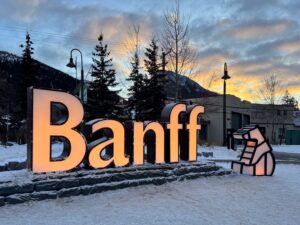
Downtown Banff & Finding a Place to Stay
After sunrise, I headed into downtown Banff…still without a hotel booked (I know, I know). As I entered town, the sun hit the mountain directly behind Banff Avenue, lighting it up like a spotlight. I just stood there staring. I’ve never seen a mountain loom so dramatically over a town.
I stopped by the visitor center for information and quickly learned two things: parking is paid almost everywhere, and parking for tall vehicles can be tricky. With my rooftop tent, height mattered more than I expected.
After reading reviews and comparing options, I booked Banff Park Lodge Resort Hotel & Conference Center. The price was better than I expected, likely because I was there early in the winter season, before peak ski crowds arrived.
When I got there, though, large-vehicle parking was already full. I ended up parking at a neighboring hotel about half a mile away and walking over. Definitely inconvenient, but hard to be annoyed when you’re walking through the beautiful town of Banff.
Tip: If you drive a tall vehicle, call hotels ahead of time to confirm parking options and height limits.
History Hit: Banff became a tourism destination after the Canadian Pacific Railway promoted it as a luxury mountain escape in the late 1800s.
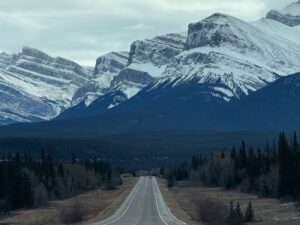
Driving the Icefields Parkway in Winter
I only had 48 hours in Banff, so once my hotel situation was sorted, I wasted no time heading toward the Icefields Parkway.
I’d seen countless videos of this road online, but seeing it in winter was something else entirely. Snow-covered peaks, frozen waterfalls clinging to canyon walls, and long stretches of road that felt completely untouched.
That said, Icefields Parkway winter driving is serious.
The highway is plowed, but snow and ice are constant, and conditions can change quickly. Some viewpoints and parking areas were open, some weren’t, and it wasn’t always clear until I pulled up. I stopped at every open viewpoint I could, soaking in the scenery and taking far too many photos.
Why I Didn’t Drive All the Way to Jasper
Driving from Banff to Jasper normally takes about three hours. In winter, between snow-covered roads, limited daylight, and how often I stopped…it simply wasn’t realistic unless I had booked a hotel in Jasper. I really believe this road deserves several days, not a rushed turnaround.
So instead of pushing it, I turned around about halfway and redirected toward Abraham Lake.
Winter Driving Tip: Snow tires are essential. Fuel up before leaving Banff or Lake Louise, start early, and always check road conditions.
Fun Fact: The Icefields Parkway follows ancient Indigenous travel routes and is often ranked as one of the most scenic drives in the world.
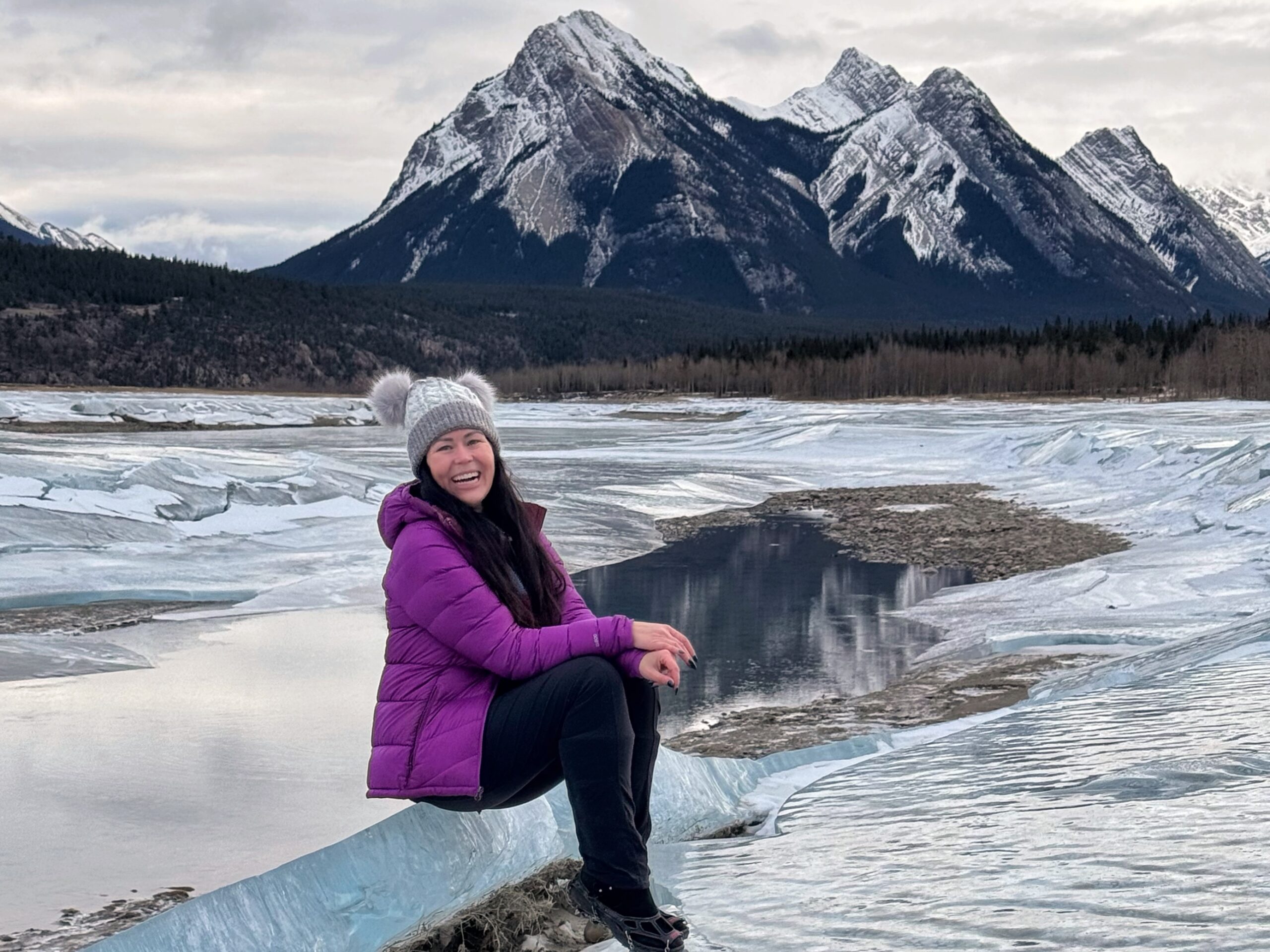
Abraham Lake & the Ice Bubbles
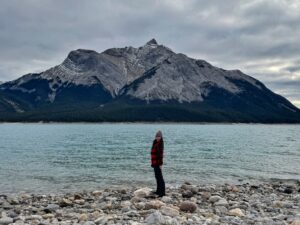
I turned toward Abraham Lake, famous for its early-season ice bubbles. I had read that bubbles had started forming near Preacher’s Point, so that became my main goal.
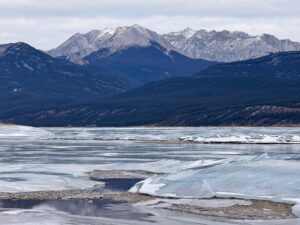
To my surprise, much of the lake wasn’t frozen yet, but that gave me my first glimpse of Banff’s famous blue water. Even muted by winter, it was still so beautiful. The wind here was intense, so after a quick stop, I headed to Preacher’s Point.
Sure enough, the bubbles were there.
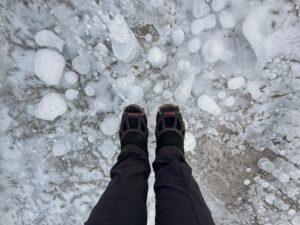
Walking on the ice felt equal parts terrifying and fascinating. In some places, you could see straight to the lake bottom just a few feet below. The loud cracking noises echoing across the lake were caused by temperature changes that make the ice expand and contract, breaking it into massive shifting plates.
Tip: Microspikes are a must. The descent to the lake is steep and icy, and traction makes all the difference.
Fun Fact: Abraham Lake is a man-made reservoir created by the Bighorn Dam, but it’s become one of Alberta’s most iconic winter photography locations.
One More Stop Before Dark: Peyto Lake
After spending time out on the ice at Abraham Lake, watching the wind push across the surface and listening to the lake crack and shift beneath my feet, I realized I still had just enough daylight left for one more stop.
There was one place I had been hoping to squeeze in all day.
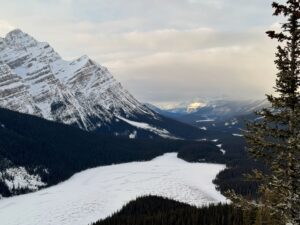
On the drive back toward Banff, I made a quick detour to Peyto Lake. I knew it would be close to sunset, but I figured even a quick look would be worth it, and I was absolutely right.
The hike to the viewpoint is short but snowy in winter, about 1.3 miles round trip. The trail wasn’t overly difficult, but it was packed down and icy in sections, so microspikes were extremely helpful. Without them, it would’ve been slow and slippery.
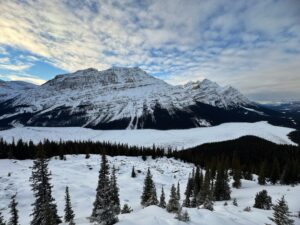
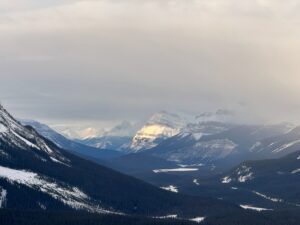
When I reached the overlook, I just stood there for a while. Even in winter, without that famous bright summer turquoise, the view was unreal. Snow-covered peaks, a frozen lake winding through the valley, and that quiet stillness that only comes at the end of a winter day.
It was the perfect way to close out my Icefields Parkway adventure.
Fun Fact: Peyto Lake gets its distinctive shape from the Peyto Glacier above it, which feeds the lake with glacial meltwater in warmer months.
As the light faded, I headed back toward Banff, knowing I had pushed my day just enough, and not a minute more.
Back to Banff & a Very Quiet Night
I caught a soft winter sunset on the drive back from the parkway and made it to my hotel completely exhausted. Between the long drive, early start, cold wind, and sensory overload, I didn’t even have it in me to go find food.
Vending machine chips became dinner.
Tip: Always pack snacks for winter trips, sometimes energy runs out before appetite does.
Fun Fact: Snow reflects light, which is why winter sunsets often feel softer and more pastel.
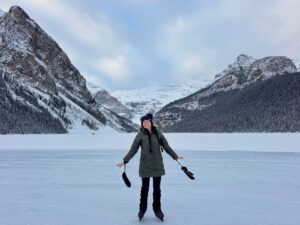
Ice Skating on Lake Louise
The next morning, I woke up early again because I had one non-negotiable plan: ice skating on Lake Louise.
From my research, I knew the ice rink itself is open whenever conditions allow, but skate rentals are only available during staffed hours inside the Fairmont Chateau Lake Louise.
Parking at Lake Louise is notorious, but because I arrived early, it was surprisingly easy. The road and parking lot were completely snow-covered, though, and it wasn’t immediately obvious where to park or walk. I followed a faint path toward the chateau and eventually found my way inside.
The chateau is massive and feels straight out of a fairy tale. Staff were incredibly helpful, and I ended up being the first person there to rent skates that morning.
Then came Lake Louise.
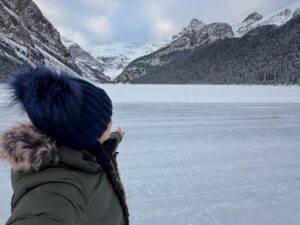
Even without seeing the turquoise water, it was everything I’d imagined. Skating across a lake I’d admired in photos for years felt surreal. I stayed for a couple of hours, but once the crowds started arriving, I quietly slipped away.
Tip: Arrive early for parking, rentals, and a quieter experience on the ice.
Fun Fact: Lake Louise freezes thick enough each winter to support skating, curling, and winter festivals.
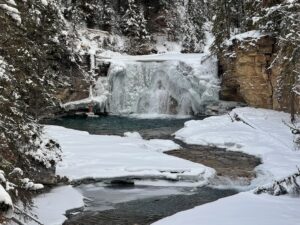
Johnston Canyon in Winter (Mileage, Crowds, and Why It’s Still Worth It)
After skating at Lake Louise, I had just enough time left for one final adventure before starting the long drive home. I debated between Johnston Canyon and Wapta Falls in Yoho National Park, but because I was alone, unfamiliar with winter road closures, and unsure about snow conditions farther west, I opted for the more popular and predictable option: Johnston Canyon.
Johnston Canyon is one of the most accessible winter hikes in Banff National Park, and it shows…it was definitely busy. That said, it never felt overwhelming.
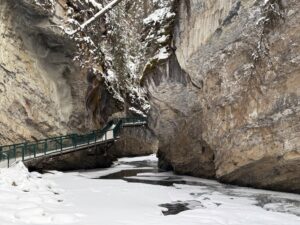
The hike to the upper falls is about 3.5 miles round trip, and the trail follows a series of elevated walkways through a narrow limestone canyon. Even in winter, you can still see that striking teal color in parts of the water, contrasting beautifully against the ice and snow.
The lower falls had a long line of people waiting for photos, so I didn’t linger there. Instead, I continued on to the upper falls, and I’m so glad I did. The falls were massive, frozen in layers, and even more dramatic than the lower section. Watching ice climbers slowly make their way up the frozen waterfall was an unexpected bonus.
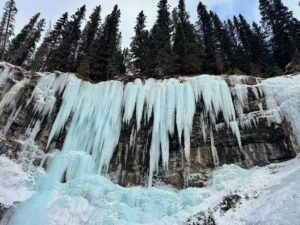
Despite the crowds, the hike genuinely felt magical, like walking through a real-life winter fairytale.
As for fees, there’s no separate hiking fee to access Johnston Canyon, but you do need a valid Banff National Park pass to be in the park.
Tip: Microspikes are highly recommended here. The boardwalks and shaded sections stay icy all winter.
History Hit: Johnston Canyon was carved over thousands of years as water eroded the limestone, creating the narrow canyon walls you walk between today.
After taking my million photos and soaking it all in, I headed back to the car, fully aware that the hardest part of the trip was still ahead.
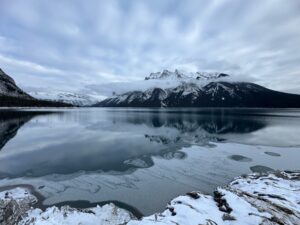
One Last Stop: Lake Minnewanka
Before leaving Banff, I made one final detour to Lake Minnewanka. The road was snowy, the light was soft, and I even passed a herd of elk along the way.
Most of the lake wasn’t frozen, which made for beautiful reflections and a calm, quiet end to the trip.
Tip: Drive slowly here as wildlife sightings are common year-round.
Fun Fact: Lake Minnewanka is Banff’s largest lake, and remnants of early settlements sit beneath its surface due to historic dam projects.
The Drive Home (and the Lesson)
About 90 minutes outside Calgary, a full blizzard hit. Visibility dropped fast, snow piled up, and there were no plows in sight. With no nearby towns offering lodging, I drove slowly and carefully for hours…my dad staying on the phone with me the entire time.
It took four hours to drive 80 miles.
I eventually found a casino hotel in Browning, Montana, slept a few hours, and then finished the drive home…arriving just 30 minutes before our New Year’s Eve party.
A drive that should have taken 13.5 hours ended up taking nearly 20.
Tip: If you’re not comfortable driving in snow, Banff in winter may not be the right trip…and that’s okay.
Fun Fact: Winter storms intensify near mountain passes due to elevation and pressure changes.
Final Thoughts: Is Banff National Park Worth Visiting in Winter?
Yes, if you’re prepared.
A winter trip to Banff National Park offers frozen waterfalls, icy lakes, fewer crowds, and an entirely different energy than summer. But it also demands patience, confidence, and respect for winter conditions.
This solo winter road trip reminded me that sometimes the drive really is the adventure, and that the hardest trips often become the most memorable.
FAQs
Do you need a park pass to visit Banff National Park?
Yes. You need a valid Parks Canada pass to enter Banff National Park, including the town of Banff, since the town itself is located inside the park.
You’ll enter the park shortly after passing through Canmore. Passes can be purchased at the park gates or online in advance.
Good to know:
- Daily Adult Pass: approximately $10–11 CAD
- Discovery Pass (annual): approximately $75 CAD
Prices can change, so always double-check before your trip.
Is Banff National Park open in winter?
Yes. Banff National Park is open year-round, 24/7. However, some roads, attractions, and facilities close seasonally due to snow and avalanche risk. Always check current road and area closures before heading out.
Is it safe to drive the Icefields Parkway in winter?
Driving the Icefields Parkway in winter can be safe if you’re prepared, but it’s not a casual drive.
The road is plowed, but snow and ice are common, conditions can change quickly, and services are limited.
Winter driving tips for the Icefields Parkway:
- Snow tires are required
- Start early to maximize daylight
- Fuel up before leaving Banff or Lake Louise
- Bring emergency supplies (food, water, blankets)
- Check road conditions the day of your drive
If visibility drops or conditions worsen, it’s okay to turn around.
Can you ice skate on Lake Louise in winter?
Yes! Ice skating on Lake Louise is one of the most iconic winter experiences in Banff.
Once ice conditions are safe, the rink is open to the public.
- Skating is free if you bring your own skates
- Skate rentals are available inside the Fairmont Chateau Lake Louise during staffed hours
Arriving early in the morning is the best way to avoid crowds and find parking more easily.
Is parking difficult at Lake Louise in winter?
Parking at Lake Louise can be challenging during peak times, but winter mornings, especially early, are much easier. Roads and parking lots are often snow-covered, so drive slowly and follow posted signs.
If parking lots fill, Parks Canada may restrict access later in the day.
How long is the Johnston Canyon hike?
The Johnston Canyon hike to the upper falls is approximately 3.5 miles round trip.
The trail follows elevated boardwalks through a narrow canyon and is considered one of the most accessible winter hikes in Banff National Park.
Do you have to pay to hike Johnston Canyon?
There is no separate hiking fee for Johnston Canyon, but you do need a valid Banff National Park pass to access the area.
Parking at the trailhead is free, but it can fill up quickly during busy winter days.
Do you need microspikes for Johnston Canyon in winter?
Yes, microspikes are highly recommended. The trail and boardwalks can be icy, especially in shaded sections and near the waterfalls. Microspikes make the hike much safer and more enjoyable.
Is Peyto Lake accessible in winter?
Yes, Peyto Lake is accessible in winter when the road is open.
The hike to the viewpoint is about 1.3 miles round trip. It’s not overly difficult, but the trail can be packed down and icy, so microspikes are strongly recommended.
Even without the famous summer turquoise color, the winter view is absolutely stunning.
Is Abraham Lake worth visiting in winter?
Absolutely. Abraham Lake is famous in early winter for its methane ice bubbles.
Conditions change quickly, and not all areas freeze evenly, so always use caution when walking on the ice. Microspikes and checking local conditions are essential.
Thank you for being here!
If you have any questions or want to share your own Canada or winter-driving stories, drop a comment or email me at cassie@thatoutdoorsygal.com I love connecting with other outdoor lovers!
And as always, please remember to leave no trace so these beautiful places stay wild for the next adventurer. Conditions, access, and fees can change seasonally, so be sure to double-check information before you go.